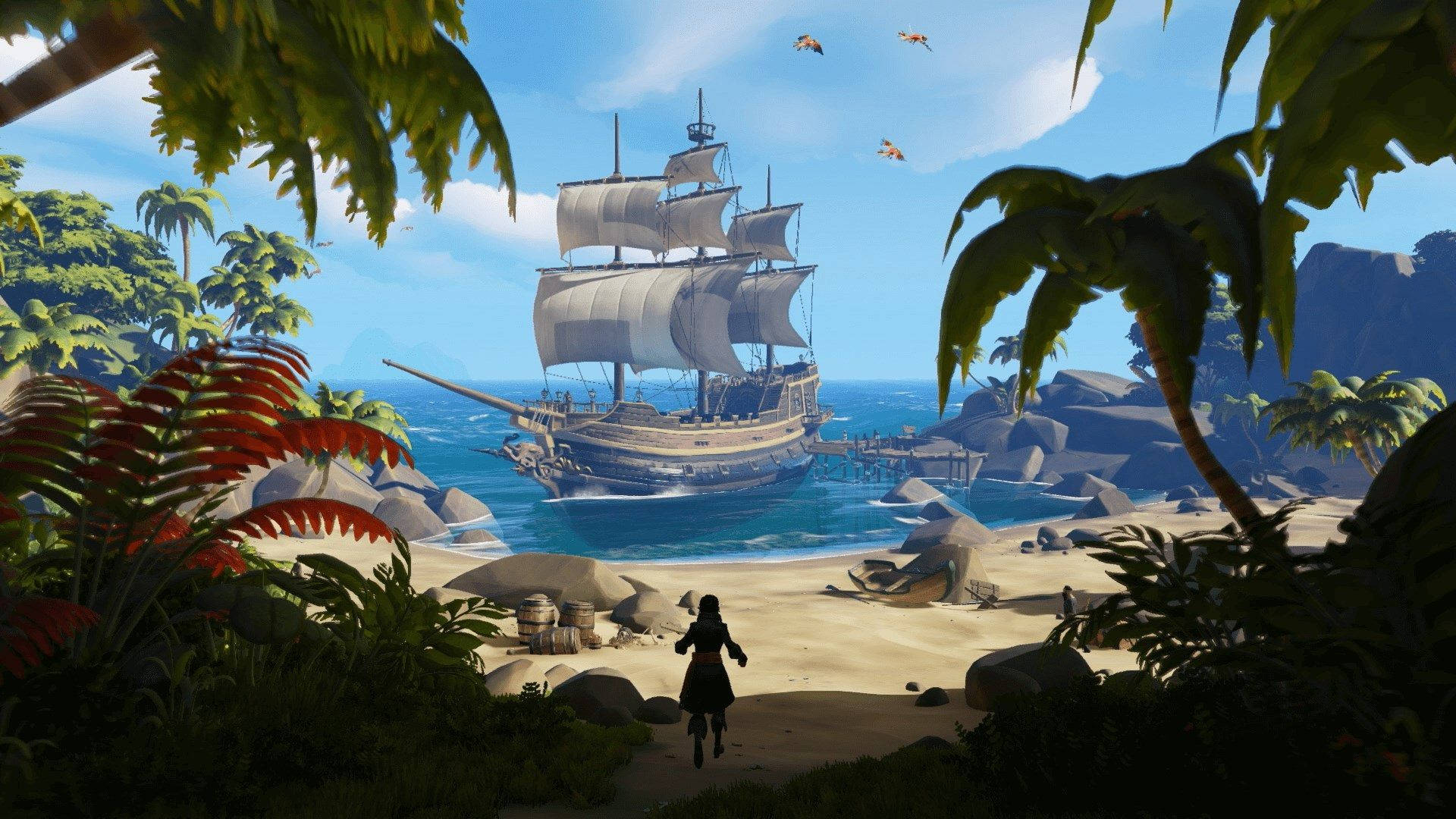
If you’ve never played Sea of Thieves: there’s a fishing system where the boring fish bite anywhere with any bait, and the rare fish (the Stormfish, the Devilfish, the Wildsplash) only bite under specific conditions. Stormfish only show up during an active thunderstorm, with no bait. Devilfish only bite near an active volcano. Wildsplash only spawn during a storm at sea, at the surface, at night. If you don’t know the conditions, you can cast all day and catch nothing but Splashtails.
That is exactly the problem with most small-business SEO content, including most of what I’ve written. You publish a "10 tips for picking a CRM" post and it sits there catching nothing because the people who actually need a CRM aren’t searching for “10 tips for picking a CRM.” They’re searching for “why does QuickBooks keep duplicating my contacts after I sync HubSpot” at 11pm with their job on the line. That’s the storm. That’s where the Stormfish are.
Splashtail posts
A Splashtail post is the generic "ultimate guide" or "best practices" article. It bites with any bait, in any conditions, but it’s worth almost nothing. You can grind out 50 of them and have nothing to show for it because every consultancy in your space has the same 50.
If I look at the Tiempo blog post by post in Google Search Console, the ones that pull any traffic are never the generic ones. They’re the weirdly specific ones. A post about a particular Mirth Connect channel config gotcha, the FusionInvoice upgrade-script footnote, the one about why DigitalOcean Droplets keep their IP across stop/start when AWS doesn’t. Those are the Stormfish.
What rare-fish content actually looks like
The pattern, looking at what’s worked:
- It answers a specific question that someone is already typing into a search box, not a question that I think they should be asking.
- It assumes they’ve already read the surface-level explainer somewhere and need the next layer down.
- It cites a real version number, a real error message, a real config file. Not "a popular CMS". "WordPress 6.4 on PHP 8.2 with the W3 Total Cache plugin enabled."
- It admits where the answer is "I don’t know" or "it depends."
None of those are things an LLM-written generic post can fake, which is increasingly the bar. The SERP is full of LLM-generated Splashtail content now, and the only way to stand out is to be specific in ways a generic prompt can’t reproduce.
The Hunter’s Call lesson
The reason the Hunter’s Call grind takes a long time is that you can’t just fish more. You have to fish in more conditions. Day, night, storms, volcanic eruptions, specific island regions, specific baits. Volume doesn’t substitute for variety in conditions.
Same thing with content. You don’t out-grind the Splashtail problem by writing more Splashtail posts. You write fewer posts that target conditions where the rare fish actually bite. The specific bug, the specific cost gotcha, the specific tradeoff nobody else has bothered to write up because it requires having actually dealt with it. The whole audit I’m running across this blog right now is essentially a Splashtail cleanup pass.
Anyway. Back to the storms. Stormfish don’t catch themselves.