On Friday, December 27, 2024, Bench. The bookkeeping-as-a-service shop that had been doing my books at Tiempo for years. Emailed customers that they were shutting down immediately. Within days, the company was sold to Employer.com, who quickly rebooted parts of the service under the Bench name. By the time most of us had finished hunting down our 2024 tax docs, the brand was technically alive again. But the relaunch didn’t un-do the trust loss, and a lot of small operators (me included) had already moved on by then.
This post is what I actually did, and what I’d tell you to consider if you’re still in that limbo.
The crucial distinction Bench customers should make
Bench bundled two things together that most other software products keep separate:
- Bookkeeping software. Categorize transactions, reconcile bank statements, produce a P&L.
- A human bookkeeper. An actual person doing the categorization for you, asking follow-up questions, and getting things ready for your CPA.
When Bench died, the urgent question was “what replaces both of these?” The answer is almost never one product. It’s a software piece plus a human piece, picked separately.
What I picked for the software piece
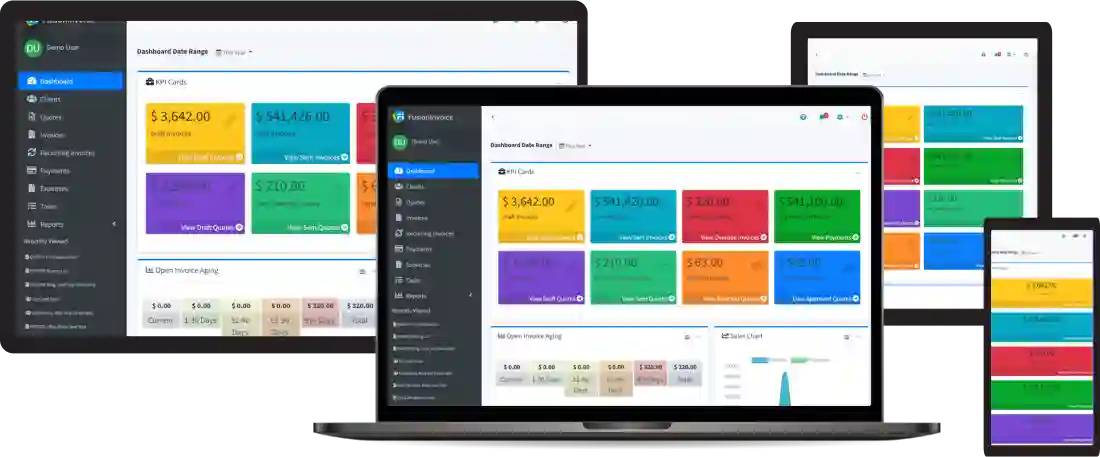
For Tiempo’s invoicing (quotes, invoices, recurring billing, payment tracking) I switched to FusionInvoice, self-hosted on a $6 DigitalOcean Droplet. I already host FusionInvoice for clients, so adding our own books was a free incremental cost. (Full install walkthrough in Self-hosting FusionInvoice on a $6 Droplet, and the cost comparison vs. QuickBooks in FusionInvoice vs. QuickBooks.)
FusionInvoice does invoicing well. It does not do bank-feed reconciliation, payroll, or year-end tax prep. For those I went separate-tools: my business checking is at a credit union, my CPA pulls statements at quarter end, and I run payroll through Gusto.
What FusionInvoice doesn’t replace
This part matters. Bench’s actual differentiator wasn’t the software. It was the human bookkeeper. If you’re a freelancer who was paying Bench partly to not have to think about categorizing transactions, FusionInvoice does not solve that. You still need either:
- A bookkeeper. Local or remote. Rates run $150–$400/month for a small operator with under 100 monthly transactions.
- Your CPA, if they offer year-end-only categorization (some do, some don’t; ask).
- Your own time, with a tool like Wave, QuickBooks, or Xero.
For Tiempo, my CPA does year-end and I categorize as I go (most of my transactions are predictable consulting income and the same five vendors). For a higher-volume business, that approach falls apart fast and a dedicated bookkeeper is genuinely the right answer.
The migration steps that actually mattered
Concrete, in the order I did them:
- Download everything from Bench while you still can. Even though Bench came back, treat your historical data as something to extract and own. Get the P&Ls, the bank-statement exports, and any 1099 work for prior years.
- Find your CPA before the software. The CPA dictates what format they want for handoffs. Pick the bookkeeping/invoicing tool that fits their workflow, not the other way around.
- Set up the new invoicing tool with one open invoice first. Don’t do a big-bang switch. Run one client’s next invoice through the new tool, confirm it gets paid, then migrate the rest.
- Don’t try to backfill history. Your old Bench-era books stay in their old format. Start the new tool clean on a Jan 1 or quarter boundary, and don’t fight to recreate the past in the new system. You have the exports.
Was the “Bench is back” relaunch worth waiting for?
For me, no. The whole episode (same-day shutdown, no warning, opaque communications) was the answer to a question I should have been asking sooner: do I want my books in a black-box SaaS, or do I want to own the data? I picked owning the data. If the new Bench is working for you and you trust the new owners, that’s a defensible call; just have an export procedure on a calendar reminder.
If you’re mid-migration and want a hand standing up self-hosted invoicing, drop me a line.